Dev-Ops
Description:
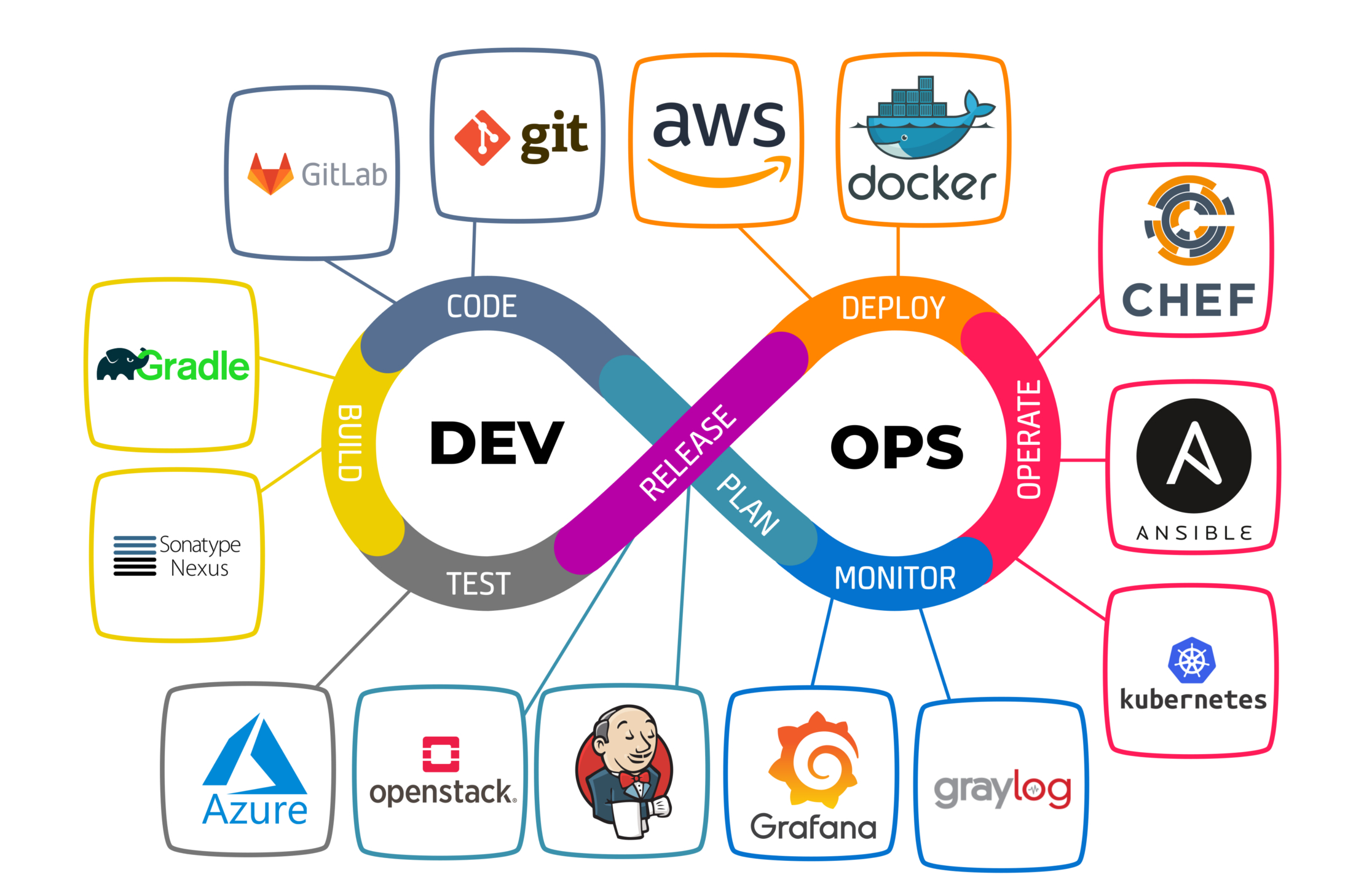
This course explores the intersection of software development and IT operations. You will move away from manual setups and learn to treat “Infrastructure as Code” (IaC). We focus on the CI/CD pipeline—the automated conveyor belt that takes code from a developer’s laptop, tests it, and deploys it to the cloud. You’ll master containerization with Docker, orchestration with Kubernetes, and learn how to monitor systems using AI-driven analytics. By the end of this course, you’ll be able to build a system that heals itself when it breaks and scales automatically when millions of users log in.
Fundamental DevOps Concepts:
Introduction to DevOps: What is DevOps, its history, principles, and benefits.
DevOps Culture: Understanding the importance of collaboration, communication, and shared responsibility between development and operations teams.
DevOps Lifecycle: Understanding the different stages of the DevOps pipeline, from planning and development to deployment, monitoring, and feedback.
Agile and DevOps: How Agile methodologies align with and support DevOps practices.
II. Core Technologies & Tools:
Linux Fundamentals: Essential commands, file systems, and administration tasks.
Source Code Management: Git: Version control, repositories, branching strategies, and collaboration.
Containerization:
Docker: Creating, managing, and sharing Docker images and containers.
Kubernetes: Container orchestration, cluster management, deployment strategies, and scaling.
Automation & Configuration Management:
Ansible: Automating infrastructure provisioning and configuration.
Terraform: Infrastructure as Code (IaC) for managing cloud resources.
Cloud Platforms:
AWS, Azure, GCP: Fundamentals, services, and DevOps best practices on each platform.
Cloud Native Technologies: Microservices, APIs, and serverless functions.
III. DevOps Practices & Processes:
CI/CD (Continuous Integration/Continuous Delivery/Continuous Deployment):
Jenkins, GitLab CI, CircleCI, Travis CI: Setting up and configuring CI/CD pipelines.
Automated testing, builds, and deployments.
Infrastructure as Code (IaC): Managing infrastructure with code, promoting automation and reproducibility.
Monitoring & Logging:
Prometheus, Grafana, Splunk: Collecting, analyzing, and visualizing metrics and logs.
DevOps Security: Security considerations throughout the DevOps lifecycle, including application security and infrastructure security.
Disaster Recovery & High Availability: Strategies for ensuring business continuity and minimizing downtime.
DevSecOps: Integrating security into the DevOps pipeline.
Course Duration: 54hrs
Prerequisites:
- Certificate in IT
- SSCE
-
-
Linux Fundamentals: You should be comfortable with the Command Line (CLI). If you’re scared of the terminal, DevOps will be tough!
-
Basic Scripting: You don’t need to be a software engineer, but you should know enough Python or Bash to automate a simple task.
-
Networking Basics: Understanding IP addresses, DNS, and ports (similar to what you’d learn in a CCNA intro).
-
The “Dev” or “Ops” Mindset: You should either know how code is built (Dev) or how servers are managed (Ops). This course connects the two.
Pro-Tip: DevOps is 20% tools and 80% culture. The goal isn’t just to use cool software; it’s to break down the walls between teams so everyone takes responsibility for a successful launch.
-